
Custom Portfolio
Website Design
Create a visual and content structure shaped around your work.
Showcase your work, skills and experience with a custom portfolio website. Present your professional identity clearly to your audience. W3 Media builds portfolio websites for professionals and businesses.
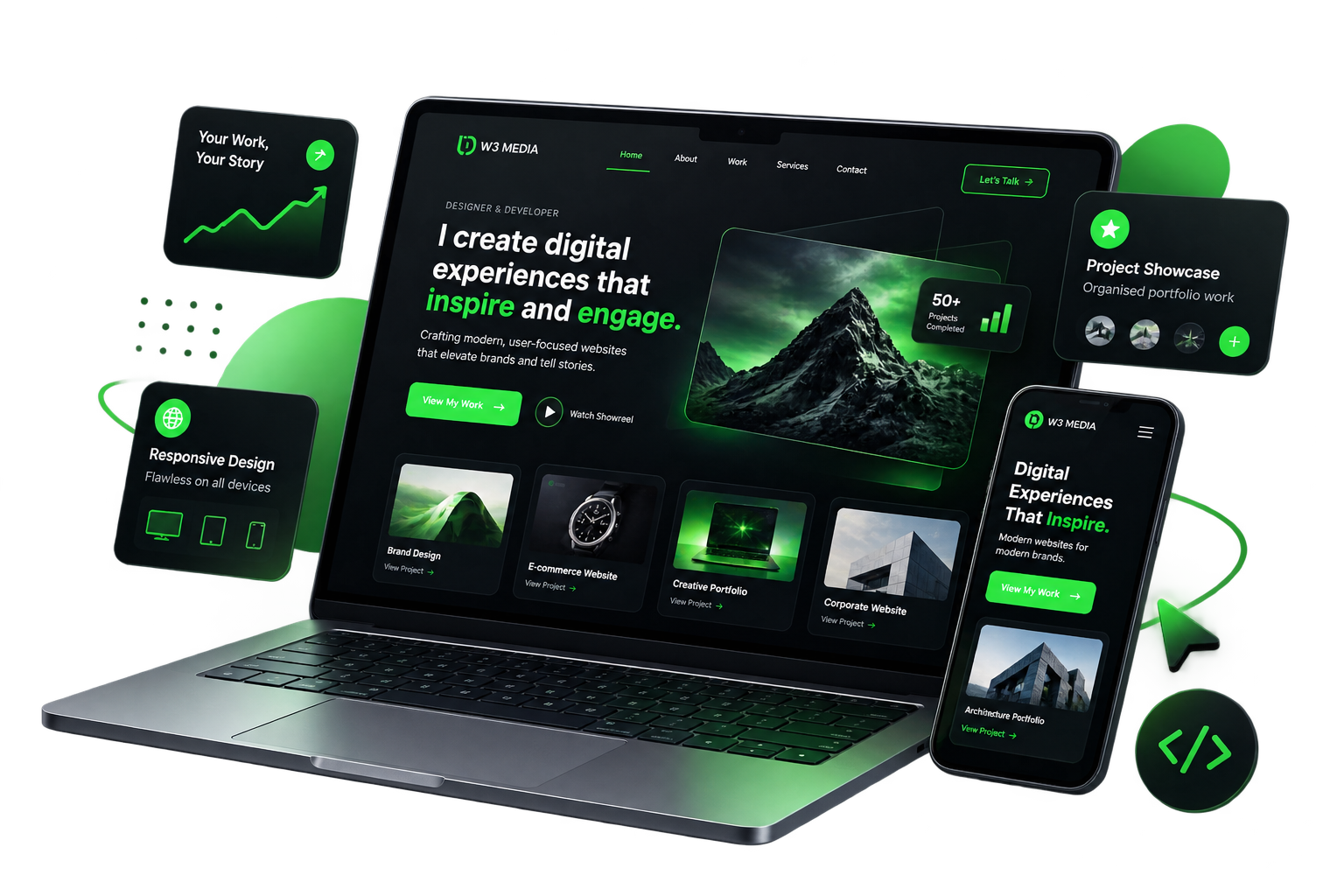
A portfolio website is a dedicated website used to present a person’s or business’s work, projects, skills, experience, services and professional information in an organised online format.
Unlike a simple image gallery, a structured portfolio gives visitors context around the work and creates a clearer journey from discovering you to exploring relevant projects and making contact.
Build your portfolio around the work you need people to see, understand and explore.
Create a visual and content structure shaped around your work.
Organise selected projects so visitors can explore relevant examples.
Give important projects enough context with names, descriptions and samples.
Clear and usable across desktop, tablet and mobile screens.
Engaging interactions that guide attention to your work.
Present your background, experience and skills clearly.
Provide visitors with a direct next step.
Share project news and professional content.
Built on search-friendly foundations for portfolio content.
The goal is to help visitors find relevant work quickly while giving important projects enough context to be understood.
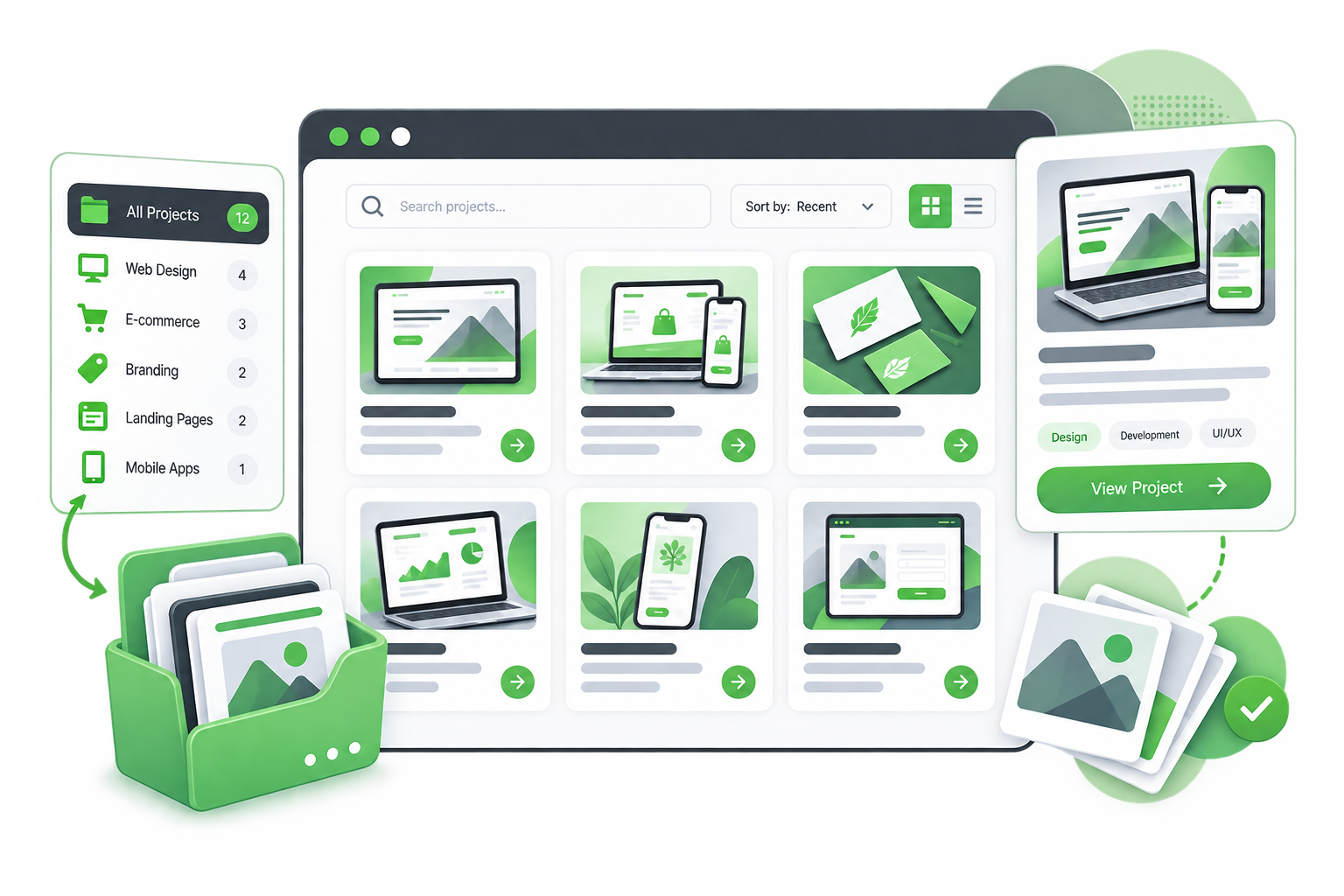
Use featured work, project galleries or suitable categories where they genuinely improve navigation.
Explain what the visitor is viewing through concise project descriptions and relevant supporting information.
Where useful, connect individual projects to the skills, expertise or services involved.
Prioritise projects that help the intended audience understand the work instead of adding content purely to increase volume.
An SEO-friendly portfolio provides search engines with useful crawlable information about your website and projects instead of relying only on visual content.
Explore SEO Services →Bring design, UX, development and search-friendly website foundations together within one portfolio website project.
Build the website around the professional identity and work that needs to be presented.
Organise projects through structured gallery and showcase areas.
Create layouts that adapt to different screen sizes.
Make projects, professional information and contact opportunities easier to navigate.
Consider clear content structure, metadata and crawlable portfolio information.
Useful answers for professionals and businesses planning a portfolio website.
A portfolio website is a dedicated online space for presenting work, projects, skills, experience and professional information. It can be useful for professionals, freelancers, creatives, consultants and businesses that need to showcase selected work clearly.
A professional portfolio website can include selected projects, project descriptions, skills, experience, services, an About section and a clear way for visitors to make contact.
Projects should be organised so visitors can quickly find relevant work. Clear categories, project titles, short summaries and consistent presentation help make the portfolio easier to explore.
Not always. Important or detailed projects can benefit from individual pages, while smaller examples may work well within a gallery or project listing. The structure should depend on how much context each project needs.
Useful project information can include the project name, a short overview, your role or contribution, relevant visuals, services involved and any context needed to help visitors understand the work.
A portfolio website is primarily focused on showcasing work and projects. A personal website can be broader, combining professional information, biography, services, articles, personal branding and other content in one place.
Yes. Social media can support visibility, while a portfolio website gives you a dedicated space where you control the structure, presentation and context around your work.
Yes. An About or Resume section can present your background, experience, skills and professional information alongside your project work.
Yes. A contact form can give visitors a direct next step after viewing your work and make it easier for potential clients, employers or collaborators to get in touch.
Yes. A blog or updates section can be used to share project news, professional insights, recent work and other relevant content when it supports the purpose of the portfolio.
Bring your projects, skills, experience and professional information together within a portfolio website designed around your audience and the work you want them to explore.
Get Your Free Consultation →Your next level of growth starts here. Partner with W3 Media to unlock your business’s true digital potential through tailored strategies, innovative solutions, and data-driven insights. Together, we’ll help you achieve measurable results and stand out in today’s competitive market.
We use cookies to give you the best experience. Cookie Policy