Keyword Research for Video Titles and Tags
Find relevant keywords, questions and topics that help connect your videos with the audience they are intended to reach.
Improve how your business videos and YouTube channel are structured for search and discovery with professional YouTube SEO services from W3 Media.
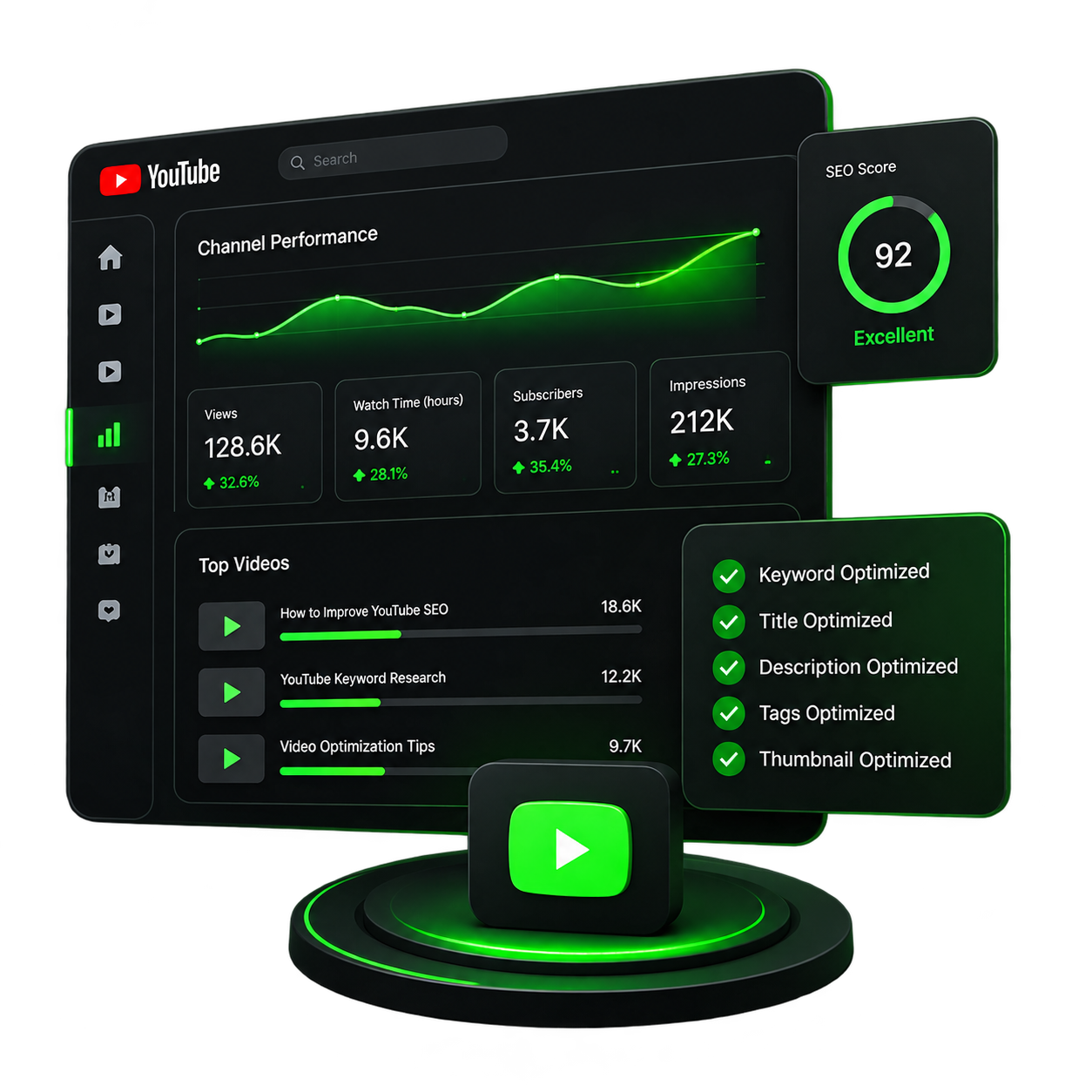
YouTube is both a video platform and a search and discovery environment. People use it to find tutorials, product information, comparisons, business information, entertainment, answers and other video content.
For businesses publishing videos, discoverability starts with understanding what the intended audience wants to find. Topics, search intent, titles, descriptions, thumbnails, channel organization, playlists and the usefulness of the video itself can all contribute to how clearly content is presented.
W3 Media's YouTube SEO services focus on making relevant business videos and channel information clearer, better organized and easier for users and search systems to understand.
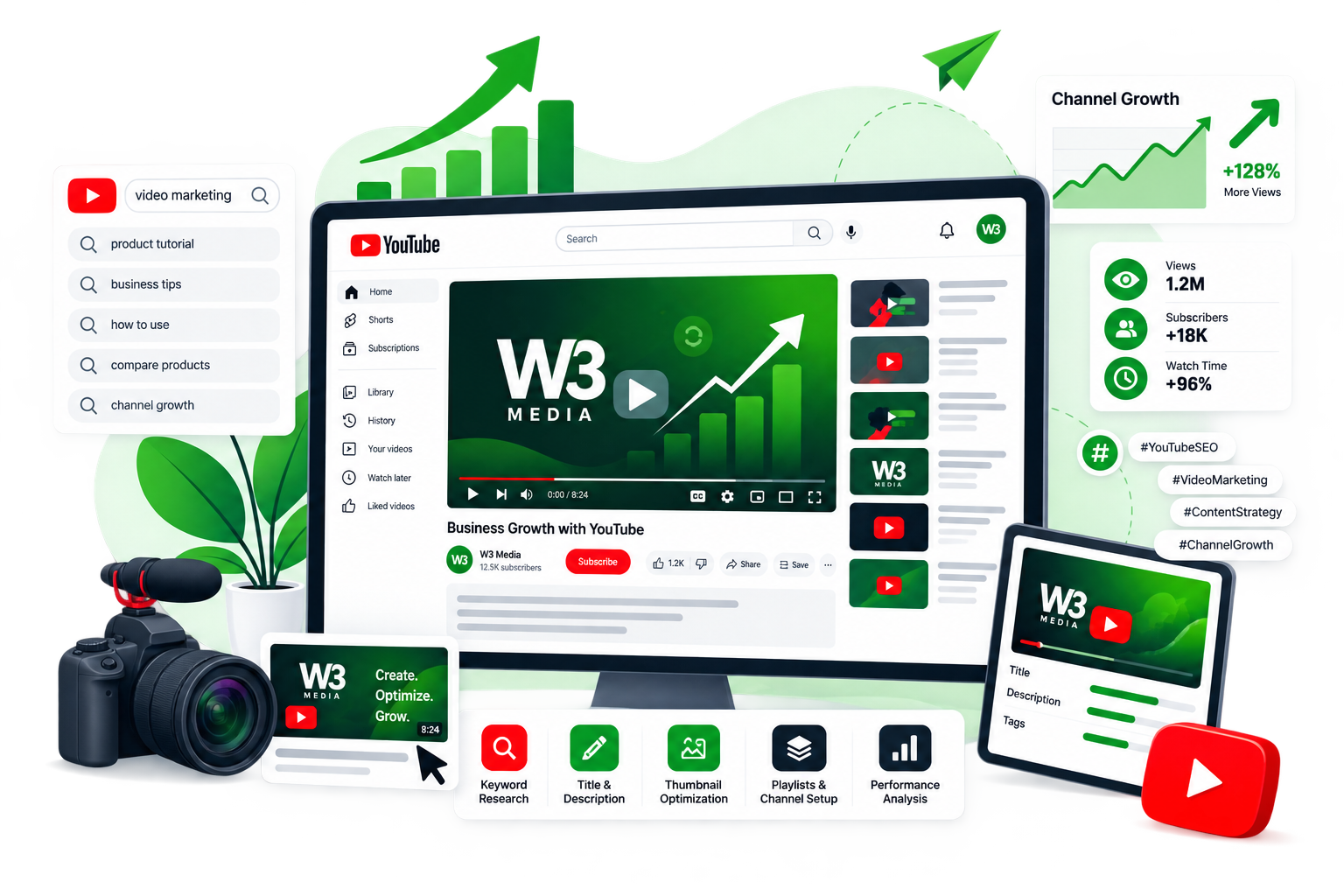
YouTube SEO is the process of optimizing video topics, metadata, presentation and channel organization so YouTube and other search systems can better understand the content and connect relevant videos with appropriate audiences.
It can involve keywords, titles, descriptions, tags, thumbnails, playlists, channel information, content organization and performance review.
YouTube SEO does not guarantee rankings, views, subscribers or recommendations.
Strengthen how your videos and channel are organized, presented and optimized for search and discovery.
Find relevant keywords, questions and topics that help connect your videos with the audience they are intended to reach.
Create clear, useful titles and metadata that communicate the video topic while supporting search visibility and relevance.
Present videos with clear, branded thumbnails designed to support visual consistency and communicate what viewers can expect.
Organize your channel with consistent branding, structured metadata and a clearer overall presentation for users.
Organize related videos into useful playlists that help viewers navigate connected topics, series and content.
Encourage genuine interaction through appropriate calls to action, comments, shares and other audience engagement opportunities.
Support video reach by connecting relevant YouTube content with useful website pages and appropriate external references.
Review available performance information to understand how videos are performing and guide future optimization decisions.
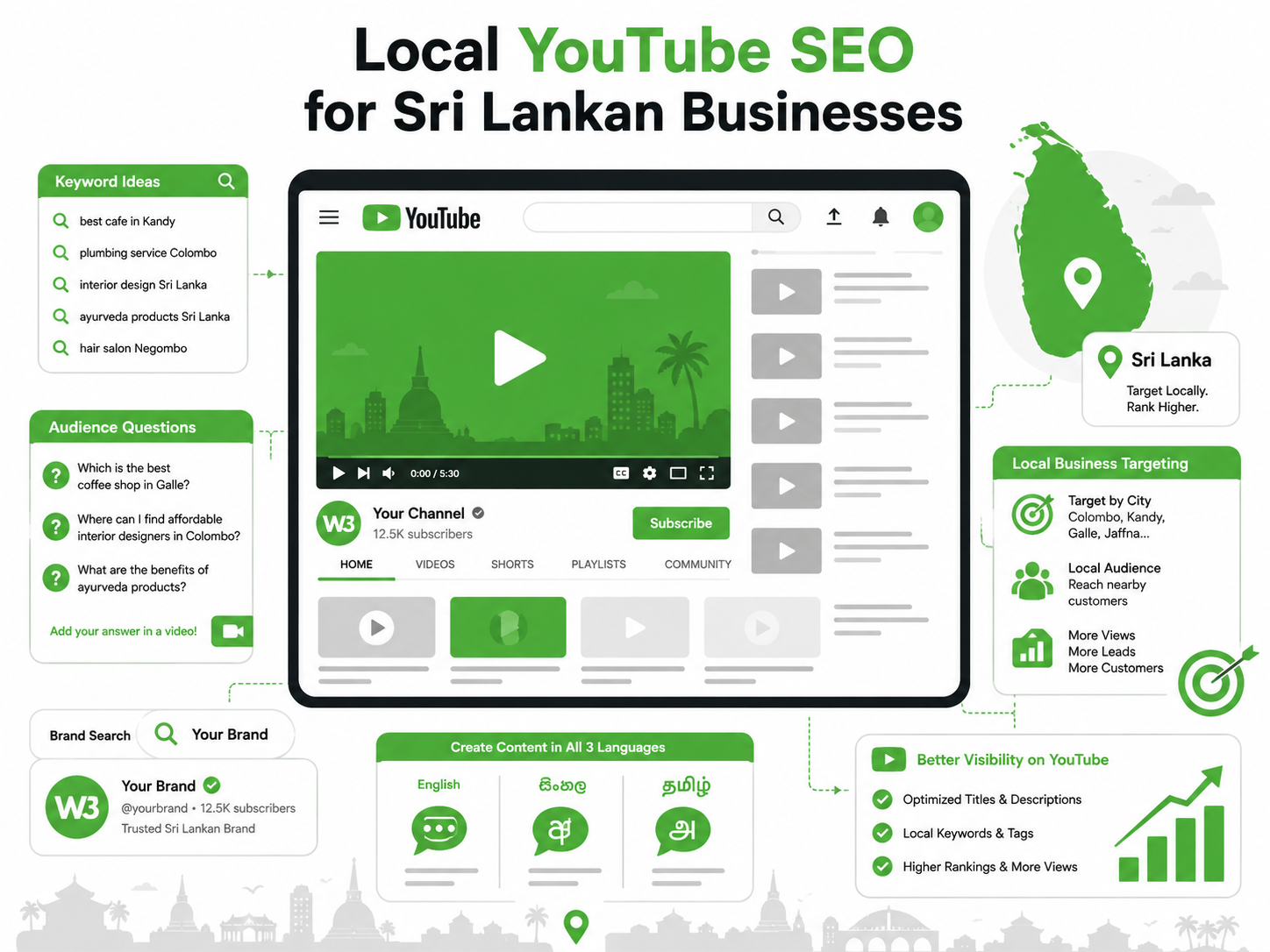
For businesses targeting Sri Lankan audiences, YouTube SEO can reflect local audience context alongside the specific subject of each video.
Language and local terminology should reflect the intended viewer rather than being added simply to create geographic keywords.
Focus on locally relevant terminology, locations, audience questions and appropriate language.
Consider terminology, audience expectations and topic differences between regional markets.
Use topics and language that make sense beyond one local market while maintaining clear audience relevance.
Video and website content can complement each other when they address related audience needs.
Videos should be embedded where they genuinely improve the page experience rather than being placed across unrelated pages purely for SEO.
A structured approach connects channel optimization with audience needs, business goals and available performance information.
Understand business objectives, audience, existing videos and content priorities.
Review metadata, channel organization, playlists, content presentation and search relevance.
Build the optimization approach around the audience, search topics, channel and objectives.
Apply the appropriate verified YouTube SEO activities across videos and channel elements.
Review available performance information and refine relevant elements over time.
YouTube-specific optimization connected with broader SEO and digital marketing capabilities.
Research relevant video topics and search terminology before optimizing metadata.
Improve titles, descriptions and tags so they communicate each video's subject clearly.
Create branded presentation that accurately represents video content.
Improve branding, layout, metadata and overall channel organization.
Organize related video content into useful topic groups.
Plan appropriate opportunities for genuine audience interaction.
Connect relevant video resources with appropriate website and external content.
Use available performance information to guide future optimization decisions.
Useful answers for businesses planning YouTube video and channel optimization.
W3 Media's YouTube SEO offering can include keyword research, title and description optimization, tag optimization, custom thumbnail design, channel optimization, playlists, engagement strategy, backlinking, video embedding and performance tracking. The appropriate activities depend on the channel and available video content.
YouTube keyword research identifies search topics, phrases and audience questions relevant to a planned or existing video. Research can help determine how the topic should be positioned and which terminology can naturally appear in titles, descriptions and related metadata.
A YouTube title should clearly and accurately describe the video's topic while naturally using relevant terminology where appropriate. Important information should be easy to understand without unnecessary repetition or misleading clickbait.
A useful YouTube description should explain the video topic and provide relevant context for viewers. Depending on the content, descriptions can include supporting information, business details, useful links and natural keyword variations.
Tags can provide additional contextual information but should not be treated as a major ranking shortcut. Titles, descriptions, the actual video topic and audience relevance are broader considerations.
Video optimization focuses on one video's topic, keywords, title, description, tags and thumbnail. Channel optimization considers the wider YouTube presence, including branding, metadata, layout, playlists and content organization.
Playlists can support content organization by grouping videos around related subjects. This can make it easier for viewers to navigate a channel and find additional relevant content, but playlists do not guarantee improved rankings or watch time.
Thumbnails help communicate what a video offers when it appears in YouTube interfaces. A useful thumbnail should represent the content accurately, maintain clear visual hierarchy and remain understandable at smaller sizes.
YouTube SEO primarily focuses on organic video and channel optimization. YouTube Ads uses paid advertising to distribute video campaigns to selected audiences. Businesses may use either approach or combine them depending on their marketing objectives.
Yes. Relevant videos can complement website pages when they add useful information for visitors. A tutorial may support an educational article while an explainer video can complement a relevant service page.
Relevant metrics can include impressions, click-through rate, views, watch time, audience retention, engagement, subscribers and traffic sources depending on the question being investigated.
Yes. Existing videos can be reviewed and updated after publication where appropriate. Titles, descriptions, tags, thumbnails, playlist placement and other channel organization elements can be refined based on the video's topic, current relevance and available performance data.
Create a clearer, better-organized YouTube presence with keyword research, video metadata optimization, channel structure, playlists, thumbnail design and performance analysis from W3 Media.
Discuss Your YouTube SEO →Your next level of growth starts here. Partner with W3 Media to unlock your business’s true digital potential through tailored strategies, innovative solutions, and data-driven insights. Together, we’ll help you achieve measurable results and stand out in today’s competitive market.
We use cookies to give you the best experience. Cookie Policy