Product Catalogue
Organise products, categories and supporting information clearly.
Build an online store around your products, customers and business goals. W3 Media combines UX, development, eCommerce functionality, SEO foundations and digital strategy to create professional online shopping experiences.
Get an eCommerce Proposal →
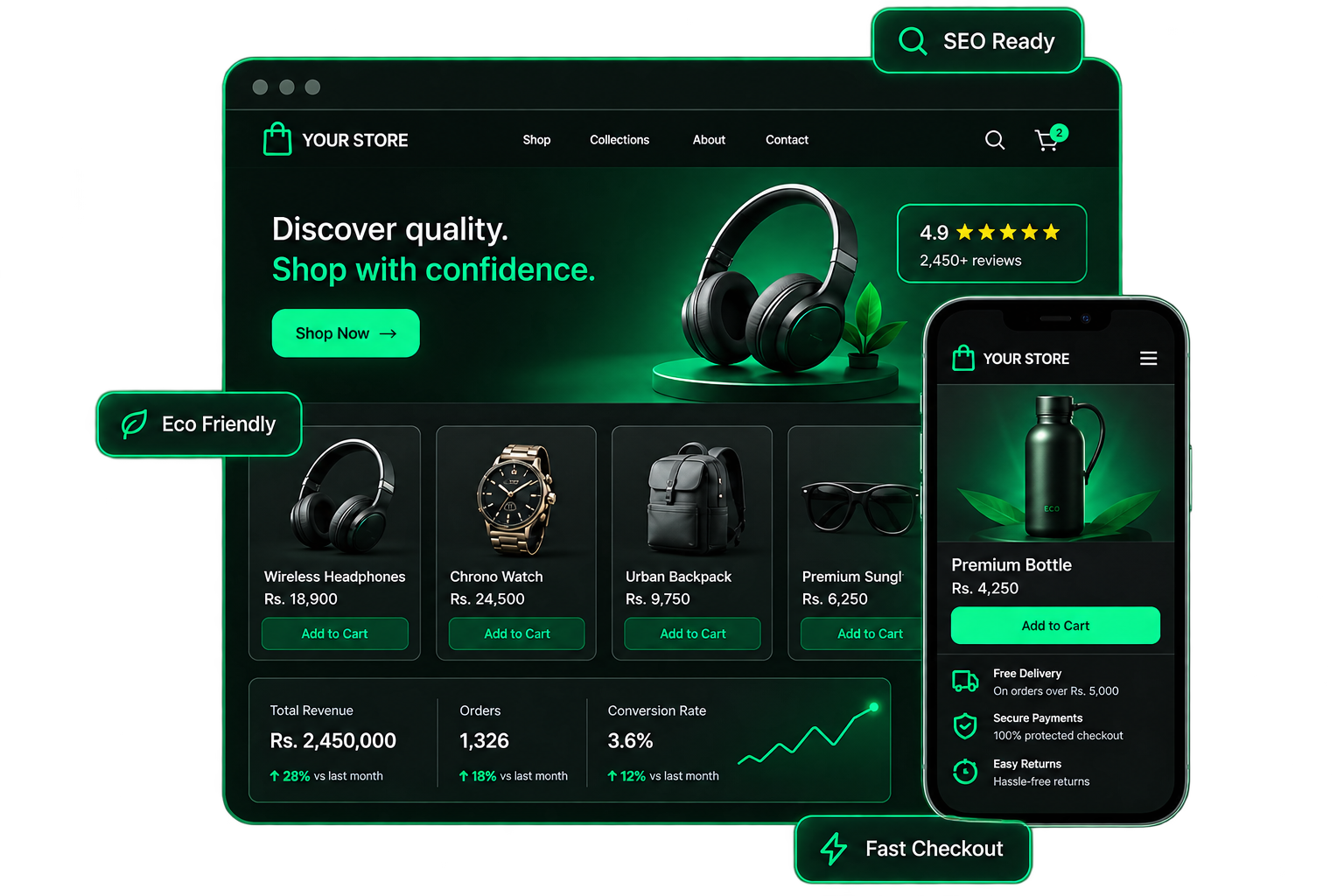
Professional online store design focused on product presentation, customer experience, navigation and brand communication.
Shopping cart functionality, payment gateway integration, customer accounts and structured checkout experiences.
Product management, inventory handling, order management and customer account functionality designed around business needs.
Search visibility, e-commerce SEO optimization, sales tracking and analytics to help businesses understand digital performance.
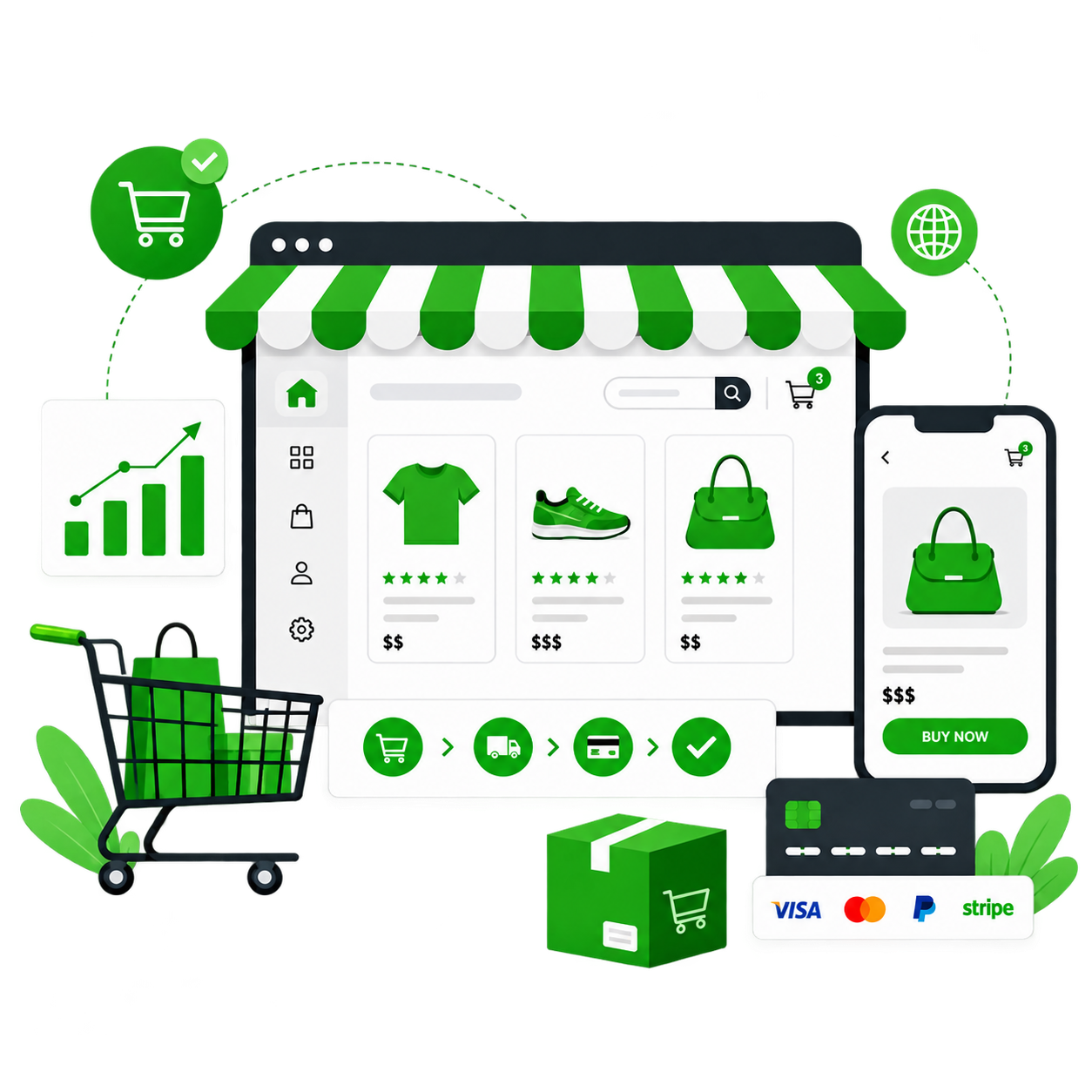
An e-commerce website is an online store that allows a business to present products or services through a website and provide customers with a structured digital shopping experience.
Professional e-commerce website design Sri Lanka should consider more than visual appearance. Product presentation, navigation, shopping cart functionality, payment options, account functionality, inventory management, mobile usability, search visibility, and the overall customer journey all contribute to how an online store works.
W3 Media develops custom e-commerce websites designed around the requirements of businesses, entrepreneurs, and organizations. The service can include modern online store design and development, shopping cart integration, payment gateway integration, product management, inventory and order management, user accounts and authentication, e-commerce SEO optimization, and sales and analytics tracking.
For Sri Lankan businesses, e-commerce solutions can also be structured around local requirements such as applicable payment methods, delivery considerations and customer expectations.
An eCommerce website is a website that allows a business to present products or services online and provide customers with a structured digital purchasing experience.
Organise products, categories and supporting information clearly.
Give customers a structured way to review selected products.
Guide users through the final stage of the purchasing journey.
Manage important product, order and store information.
The customer-facing store and the operational functionality behind it should work together as one connected digital experience.
Structure your online store around your brand, products and customer journey instead of relying on a generic layout.
Design clearer paths between navigation, products, cart and checkout to reduce unnecessary customer friction.
Organise products into logical categories and store structures that are easier to manage and browse.
Develop structured shopping-cart and checkout experiences around the selected eCommerce solution.
Configure appropriate payment functionality based on the selected provider, platform and project requirements.
Configure store delivery requirements according to platform capabilities and your business workflow.
Help customers move through categories and product collections using logical navigation and search structures.
Support store operations with product inventory and order-management functionality suited to the selected platform.
Connect important store interactions with meaningful analytics and reporting requirements.
Platform selection should depend on your products, store-management requirements, website environment and future development needs.
WordPress-based eCommerce suitable for businesses that want a flexible online-store environment connected with WordPress.
A dedicated eCommerce platform for businesses that want to operate through Shopify's established store-management ecosystem.
Projects with specialised functionality can be evaluated against W3 Media's broader custom website-development capabilities.
Your online store can act as the destination for organic search, paid advertising and social-media activity as part of a wider digital strategy.
Build search-friendly category architecture, internal links, product information and technical foundations.
Connect paid campaigns with relevant products, categories and landing pages instead of generic destinations.
Support product discovery and campaigns through connected social-media marketing activity.
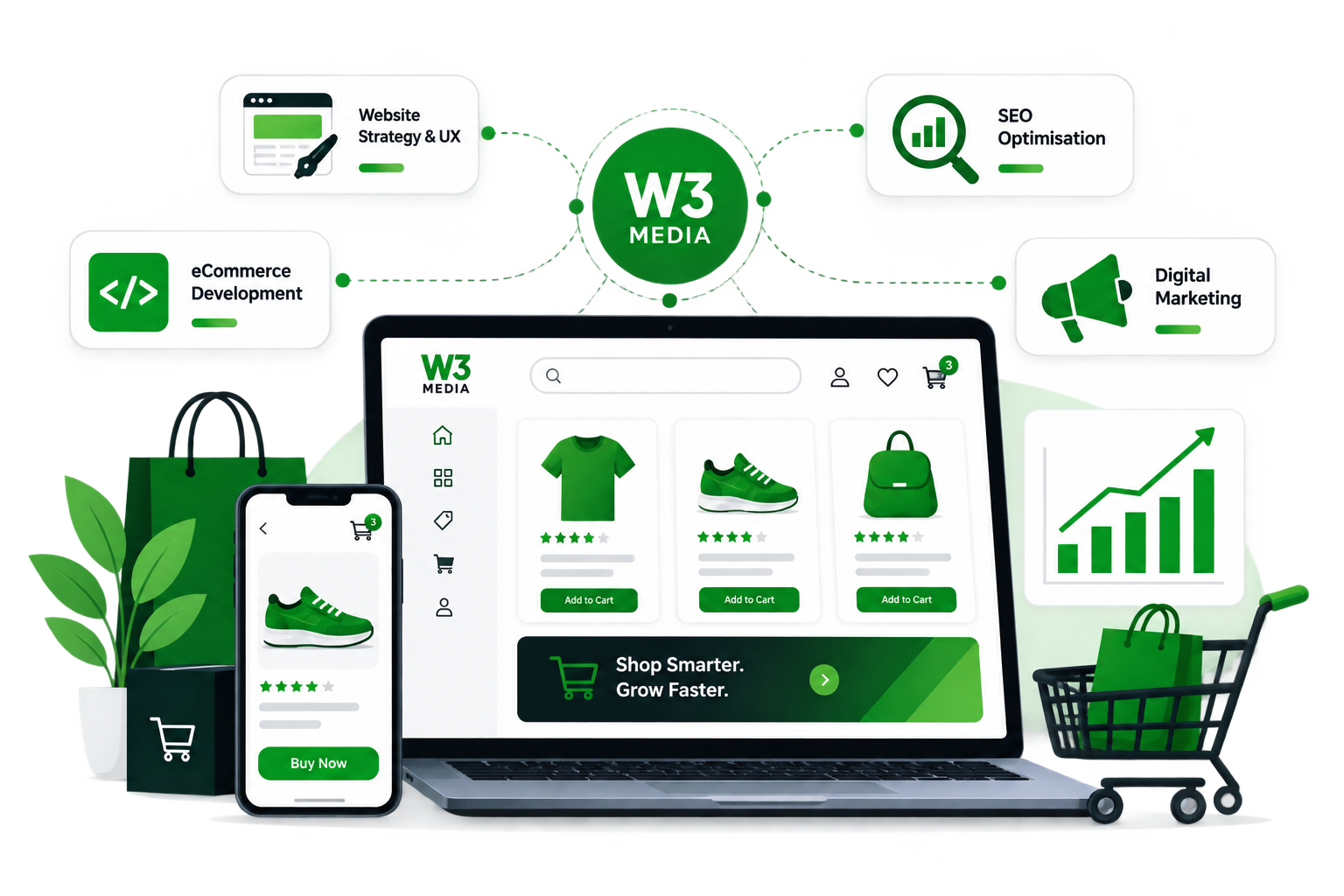
W3 Media combines website strategy, UX, development, SEO and digital marketing capabilities around your online-store requirements.
Structure the store around the business instead of a preset template.
Bring customer experience and technical functionality together.
Consider SEO requirements as part of the store structure.
Connect development with SEO, PPC and social-media services.
Useful answers for businesses planning an online store in Sri Lanka.
Prepare your product information, categories, pricing, images, delivery requirements, payment needs and key business goals. It is also useful to define how customers should search, browse and purchase products before development begins.
The right platform depends on your website environment, store-management needs, product catalogue and future development requirements. WooCommerce can suit businesses that want an eCommerce store connected with WordPress, while Shopify provides a dedicated eCommerce platform and store-management ecosystem.
Yes. SEO can be considered from the beginning through site structure, product and category organisation, internal linking, technical foundations, page content and search-friendly URLs. Planning these elements during development can create a stronger foundation for organic visibility.
Yes. Product search and filtering can help customers find relevant products more efficiently, particularly when a store has a larger catalogue. The appropriate filters should be based on the types of products and information available.
Product categories should reflect how customers naturally browse and search for products. A clear hierarchy of main categories and relevant subcategories can improve navigation, product discovery, user experience and the overall structure of the website.
Requirements depend on the payment provider selected for the online store. Businesses typically need an approved merchant or payment account, the required credentials and the technical information provided by the payment gateway. Integration requirements should be confirmed with the selected provider.
Good eCommerce UX helps customers move smoothly from product discovery to product pages, cart and checkout. Clear navigation, useful product information, simple interactions and a well-structured purchasing journey can make an online store easier to use.
The website should be planned with scalable category structures, consistent product information, flexible navigation and suitable search or filtering options. This makes it easier to add new products and categories without creating an unnecessarily complicated shopping experience.
Yes. An eCommerce website can act as the central destination for organic search, paid advertising and social-media activity. Product pages, categories and landing pages can be structured to support connected digital marketing campaigns.
An eCommerce website development company can bring strategy, UX and technical development together around the requirements of the online store. This helps businesses plan the platform, catalogue structure, shopping journey and wider digital marketing foundation as one connected project.
Your next level of growth starts here. Partner with W3 Media to unlock your business’s true digital potential through tailored strategies, innovative solutions, and data-driven insights. Together, we’ll help you achieve measurable results and stand out in today’s competitive market.
We use cookies to give you the best experience. Cookie Policy