
Travel SEO
Improve the search foundations of destination pages, travel services, tour packages and useful travel content through keyword research, on-page SEO, technical SEO, internal linking and ongoing optimisation.
Explore SEO Services →Build a stronger digital presence across search, paid media, social platforms and travel websites. W3 Media helps travel agencies, tour operators and tourism businesses connect destination discovery with relevant enquiries, bookings and measurable digital growth.
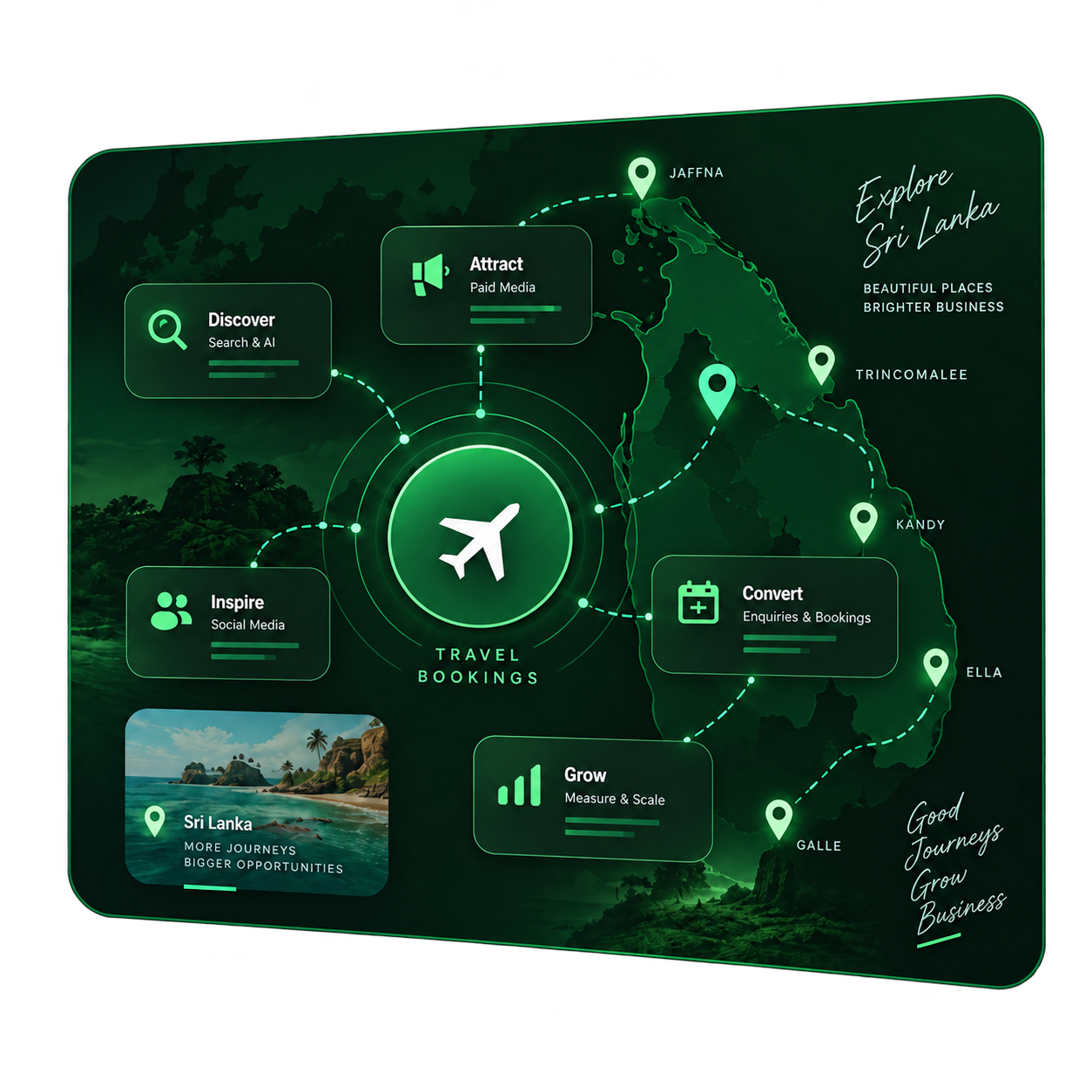
A traveller may discover Sri Lanka through Google, a destination video, Instagram, TikTok, YouTube, a recommendation or an AI-powered search experience before visiting several websites, reading reviews and comparing itineraries.
Effective travel marketing therefore needs more than a single advertising channel. SEO, content, paid advertising, social media, website experience, reputation signals and analytics should work together around the traveller's research and decision journey.
Digital marketing for travel agencies is the strategic use of SEO, PPC, social media, content, websites, email, reputation management and analytics to improve travel discovery, communicate offers and support relevant enquiries or booking actions.
Travel decisions are often researched over multiple touchpoints. Marketing should support each stage instead of treating every website visitor as someone ready to book immediately.
Destinations, experiences and travel inspiration create initial interest.
Travellers look for destinations, tours, activities and travel companies.
Packages, itineraries, destinations, reviews and practical information are compared.
Travellers evaluate suitability, inclusions, trust and different providers.
The journey moves towards contact, quotation or a booking action.
Post-travel feedback can strengthen reputation and future discovery.
The right channel mix depends on your destinations, services, audiences, markets, budget and customer journey.
Improve the search foundations of destination pages, travel services, tour packages and useful travel content through keyword research, on-page SEO, technical SEO, internal linking and ongoing optimisation.
Explore SEO Services →Reach relevant travellers searching for tours, destinations, travel services or packages through paid campaigns connected with appropriate landing pages, audience targeting and conversion tracking.
Explore PPC Advertising →Build destination awareness with visual storytelling, Reels, short video, travel tips, itineraries, paid social, creator partnerships and content designed around how people discover travel experiences.
Explore Social Media →Build responsive travel websites that organise destinations, tour packages and useful information while providing clear enquiry, WhatsApp or booking journeys for potential customers.
Explore Web Development →Travel marketing should begin with the business, markets and traveller journey before deciding where budget and activity should be allocated.
Understand services, destinations, audiences and objectives.
Review search behaviour, competition, channels and demand.
Define priorities, channel roles and measurable actions.
Develop campaigns, content, pages and technical foundations.
Review relevant search, advertising, lead and website signals.
Use available evidence to identify the next priorities.
W3 Media brings search, advertising, social media, websites, content and measurement together so each channel can support the wider traveller journey.
Connect SEO, paid media, social, website and content activity around business objectives rather than isolated tactics.
Combine technical SEO, content optimisation, Local SEO and ongoing search strategy around relevant travel discovery.
Connect digital campaigns with responsive websites, focused landing pages and appropriate enquiry experiences.
Review traffic, campaigns, enquiries and other meaningful actions instead of relying only on vanity metrics.
Build strategy around your real local business context while supporting international traveller discovery where relevant.
Develop structured, useful content for traditional organic search while considering AI-powered discovery and GEO.
Clear answers for travel agencies, tour operators and tourism businesses evaluating digital marketing in Sri Lanka.
Digital marketing for travel agencies uses websites, SEO, paid advertising, social media, content, email, reviews and analytics to help travellers discover destinations, tours and travel services online. A travel marketing strategy can support enquiries, bookings, brand visibility and communication with both local and international travellers.
Travellers often research destinations, accommodation, activities, itineraries and travel companies online before contacting an agency. Digital marketing can help a Sri Lankan travel business present its services clearly, reach relevant audiences and provide useful information throughout the research and booking journey.
Travel agency SEO is the process of improving a travel website so search engines can better understand its destinations, tours, services and supporting content. It can include keyword research, technical SEO, destination pages, tour-page optimization, internal linking, content development and other search-focused improvements.
SEO can help a travel agency become more discoverable for searches related to relevant destinations, itineraries, activities and travel services. It can also improve website structure and help travellers reach more useful pages during their research. SEO can create visibility opportunities, but specific rankings or booking volumes cannot be guaranteed.
Destination SEO focuses on broader searches related to places, attractions, activities and travel planning. Tour package SEO focuses on specific experiences, itineraries or commercial travel packages. A destination page may support early research, while a package page can address visitors who are closer to comparing or enquiring about a particular tour.
A dedicated page can be useful when a travel package has a distinct itinerary, audience, destination or search intent and enough useful information to justify its own page. Travel businesses should avoid creating large numbers of near-identical pages simply to target keywords. Each package page should provide genuine value to travellers.
Google Ads can help travel agencies gain paid visibility for relevant searches and can be useful for selected destinations, packages, seasons or campaigns. Performance depends on factors such as search demand, competition, targeting, budget, ad quality and landing-page relevance. Paid advertising does not guarantee enquiries or bookings.
Social media can be useful for travel businesses because destinations and experiences are highly visual and often benefit from photography, video, travel stories and customer experiences. The most suitable platforms depend on the target audience, available content and the role social media plays in discovery, engagement and enquiry generation.
Useful travel content can include destination guides, itinerary information, activity guides, travel tips, seasonal information, FAQs, tour explanations and practical information for visitors. Content should be accurate, useful and aligned with the services actually offered rather than being published only for keyword targeting.
Local SEO can help travel agencies that have a genuine physical location or serve customers within specific geographic areas. This can include Google Business Profile optimization, consistent business information, local pages and location-focused searches. It is especially relevant when customers search for nearby travel agencies or local tourism services.
A Sri Lankan travel agency can target international customers by developing destination and tour content for relevant overseas audiences, using international SEO research, suitable paid campaigns, social media, partnerships and clear English-language or multilingual website content where appropriate. Targeting should reflect the markets the agency can genuinely serve.
The right option depends on how the travel business sells its services. Standardized tours with clear availability and pricing may suit online booking, while customized itineraries or complex travel arrangements may benefit from an enquiry process. Some travel websites use both so visitors can choose the most suitable next step.
Genuine customer reviews can give prospective travellers additional context about previous experiences with a travel agency, tour or service. Reviews can support trust during the research process, but businesses should avoid fabricated testimonials or misleading edits and should respond to public feedback professionally.
Measurement should reflect the objective of each channel or campaign. Relevant metrics can include organic search visibility, website traffic, destination and package-page engagement, enquiries, booking actions, conversion rate, advertising costs and qualified leads. Where possible, reporting should connect marketing activity with meaningful business outcomes rather than relying only on impressions or clicks.
Travel SEO does not have a fixed timeframe. Progress depends on the current condition of the website, competition, search demand, technical issues, content quality, destination coverage and the strength of competing websites. Some improvements may become visible earlier than others, while competitive travel searches can require sustained work over a longer period. Specific rankings or timelines cannot be guaranteed.
Connect SEO, paid media, social content, website experience and measurement around the way travellers actually discover, research and evaluate your business.
Explore W3 Media Services →We use cookies to give you the best experience. Cookie Policy