
Website Speed Optimization
Address identified website-performance issues that can affect loading experience, interaction responsiveness and usability.
Resolve technical website issues affecting crawlability, indexability, performance, mobile usability and search-engine understanding with technical SEO implementation from W3 Media.
Identifying a technical SEO problem is only the first stage. Technical SEO implementation focuses on making the appropriate website-level changes after issues have been identified.
Technical SEO implementation is the process of making website-level technical changes that improve how search engines discover, crawl, process and understand important pages, while supporting website performance, usability and technical consistency.
Technical SEO strengthens website foundations but does not guarantee rankings, traffic or indexing.
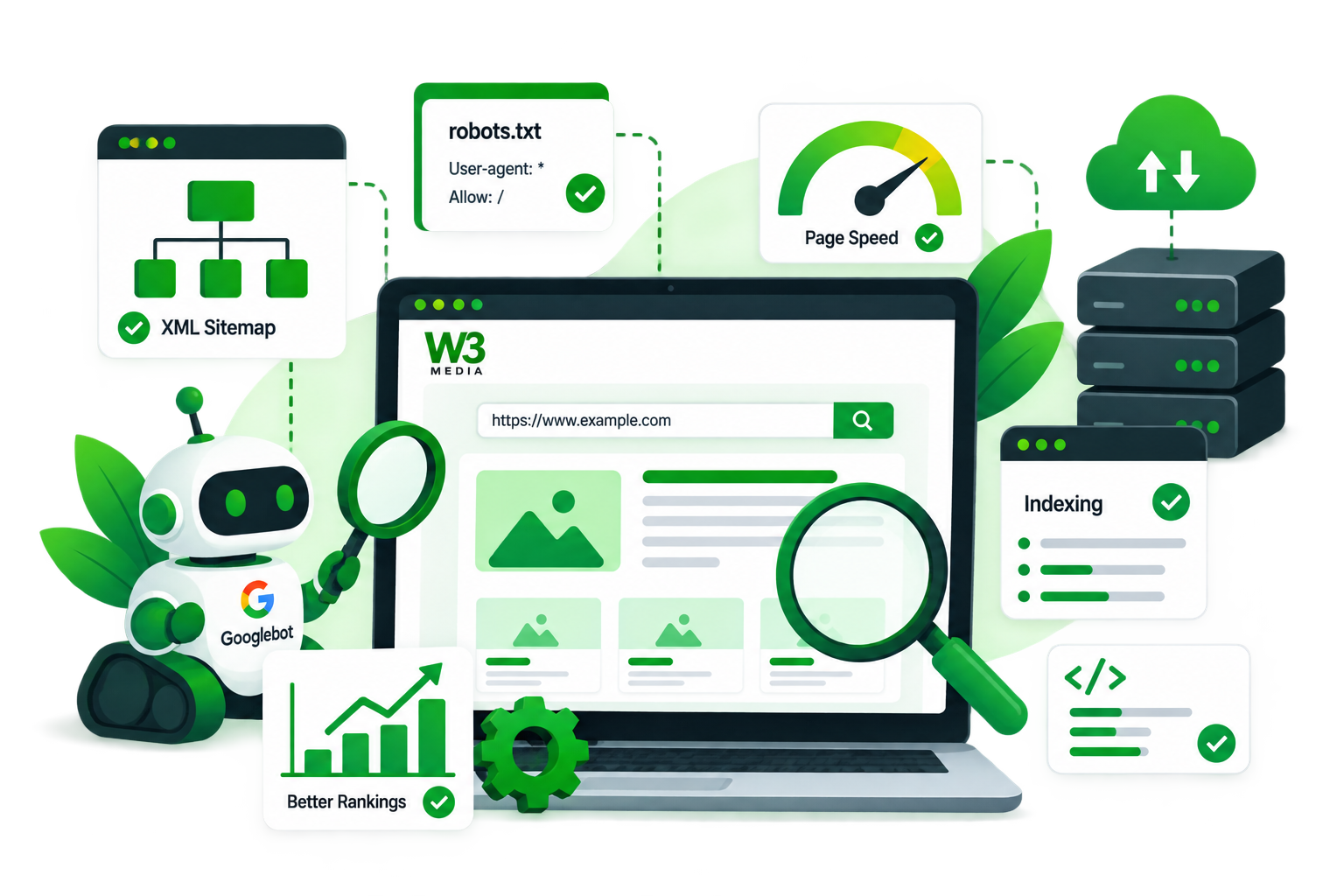
W3 Media's Technical SEO Implementation service focuses on practical corrections rather than only producing a list of technical warnings.
Address identified website-performance issues that can affect loading experience, interaction responsiveness and usability.
Improve relevant mobile usability and responsive behaviour across important pages and website interactions.
Configure important URL-discovery and crawler-access signals so search systems can more clearly access intended content.
Add appropriate schema markup that accurately represents visible page content and relevant website entities.
Implement preferred-URL signals for appropriate duplicate or substantially similar URL situations.
Correct verified crawl-related problems, unavailable internal destinations and inappropriate link behaviour where required.
Support appropriate HTTPS-related technical configuration for secure browser-to-website communication.
Crawlability concerns whether search-engine crawlers can discover and access important content.
Indexability concerns whether a page is technically eligible to be included in a search engine's index.
Internal links &
sitemap
Access &
robots rules
Canonicals &
directives
No ranking
guarantee
Website performance should be evaluated through meaningful user experience signals rather than chasing a single PageSpeed score.
Click a card to view detailsHow quickly important page content becomes visible to the visitor.
Can be influenced by large hero assets, resource delivery, server response and render-blocking resources.
How quickly the website responds when users interact with important interface elements.
Heavy JavaScript, complex interactions and long-running browser tasks can affect responsiveness.
How consistently page elements remain in position while content is loading.
Missing image dimensions, dynamically inserted elements and font behaviour can contribute to unexpected layout movement.
Technical SEO controls help search engines discover, access and interpret important website information more clearly.
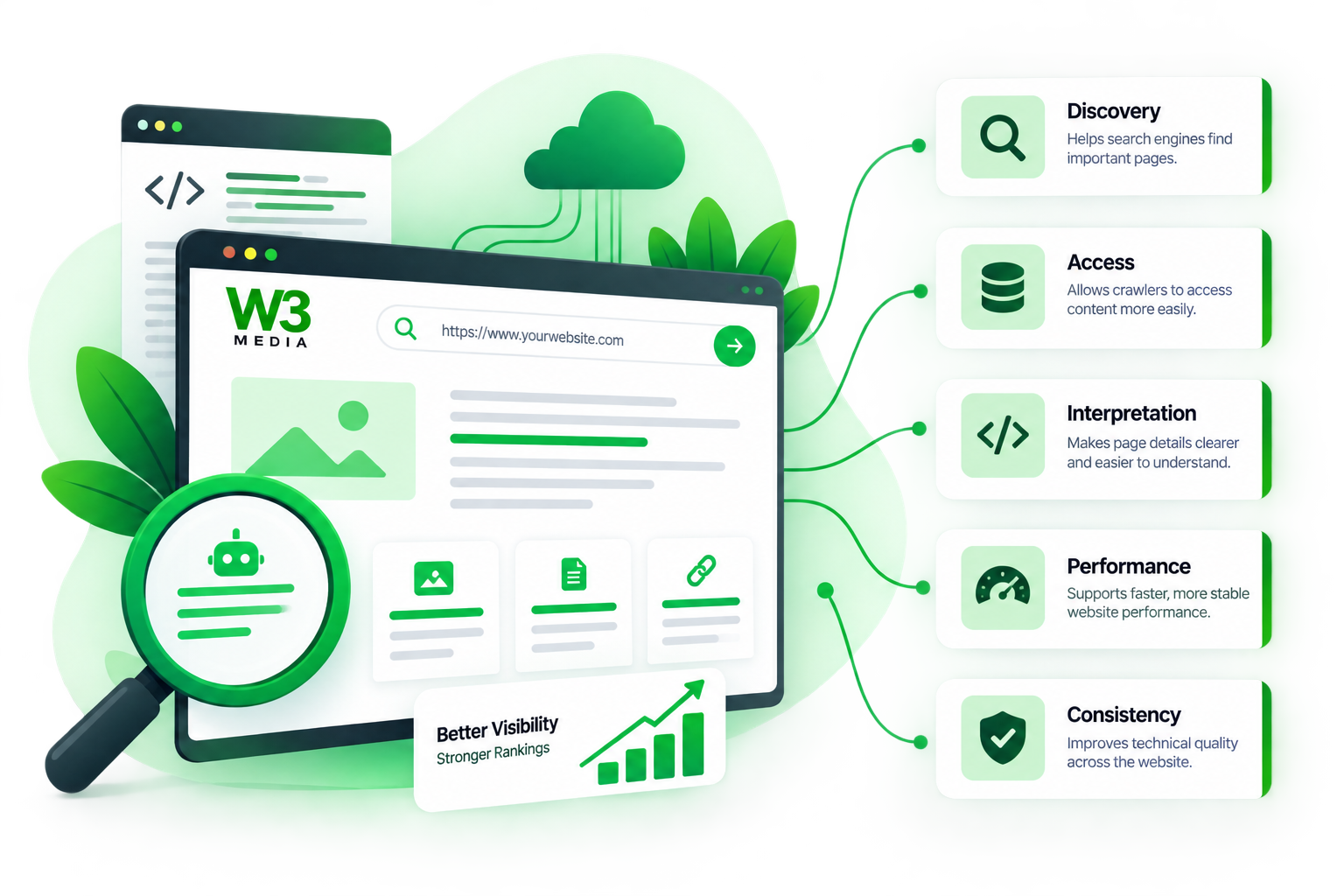
Helps search systems discover important URLs. Sitemap submission does not guarantee indexing.
Provides crawling instructions to compliant crawlers. It is not a reliable universal method for removing indexed URLs.
Signals a preferred URL for appropriate duplicate or substantially similar content.
Makes page and entity information more explicit to machines. Rich results are not guaranteed.
W3 Media combines Technical SEO Implementation with broader SEO audit, consultancy, SEO setup and website-development capability. This is useful when a technical SEO correction requires more than a recommendation and needs an actual website-level change.
Clear answers for businesses planning technical SEO implementation, crawlability, indexing, structured data, redirects and website performance improvements.
A technical SEO audit identifies technical issues, risks and opportunities within a website. Technical SEO implementation focuses on applying the required changes, such as fixing crawlability problems, updating redirects, improving indexing controls, correcting structured data or addressing other technical SEO recommendations.
Technical SEO implementation can address relevant issues involving crawlability, indexability, redirects, broken URLs, canonical elements, XML sitemaps, robots.txt configuration, structured data, internal technical issues and website performance. The exact work depends on the website, platform and issues identified.
No. An XML sitemap helps search engines discover important website URLs, but submitting a sitemap does not guarantee that every URL will be indexed. Search engines still evaluate factors such as crawlability, duplication, canonicalization, content quality and whether a page is suitable for inclusion in the search index.
Robots.txt provides crawling instructions and can restrict search engine crawlers from accessing particular areas of a website. A noindex directive tells compatible search engines that a page should not be included in their index. These controls serve different purposes and should be implemented carefully.
No. Correct schema markup can help search engines understand eligible page information more clearly, but it does not guarantee that a rich result will appear. Search engines determine whether and when enhanced search features are displayed based on their own systems, policies and page eligibility.
No. A 404 response is appropriate when a page no longer exists and there is no relevant replacement. A redirect is more appropriate when an old URL has moved or when there is a genuinely relevant alternative page. Redirecting every missing URL to unrelated pages can create a poor user experience and an unclear website structure.
Technical improvements can support better Core Web Vitals where performance issues are caused by factors such as slow resource loading, inefficient scripts, large images, rendering delays or layout instability. The appropriate fixes depend on the website's technology, design and performance bottlenecks.
Yes. Technical SEO should be reviewed after a major redesign or migration to confirm that important URLs, redirects, canonical elements, robots directives, XML sitemaps, structured data and indexing settings still work as intended. Post-launch checks can help identify technical problems before they affect important search visibility.
Move from technical findings to practical website improvements across crawlability, indexability, performance, structured data and technical configuration
Discuss Your Technical SEO →We use cookies to give you the best experience. Cookie Policy