
SEO for Finance Companies
Connect genuine finance-related search intent with relevant service pages, technical SEO, content, internal linking and local relevance where appropriate.
Explore SEO Services →Build a clearer digital presence for your financial-services business through SEO, digital advertising, social media, content, website experiences and performance measurement aligned with your business objectives and communication requirements.
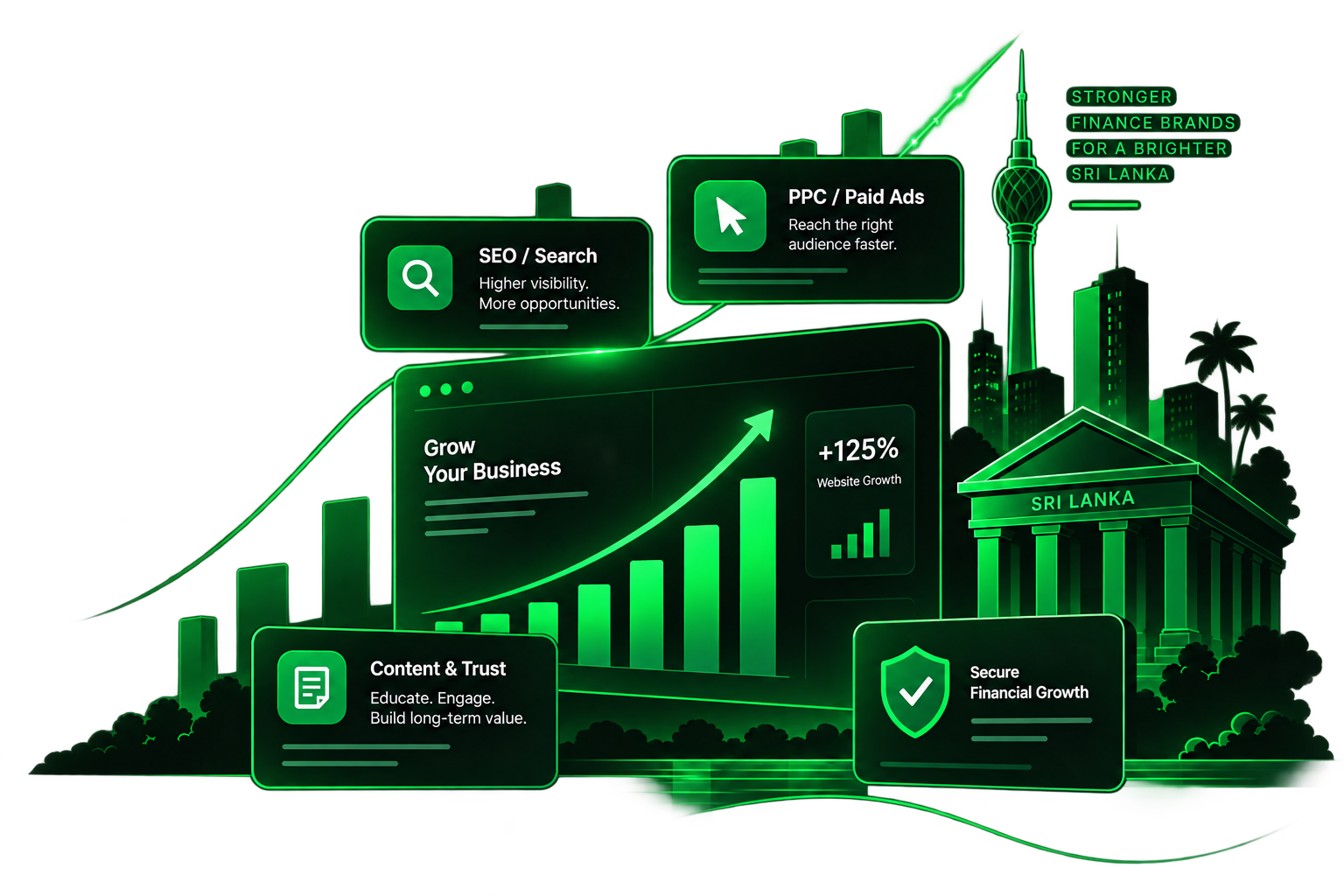

People evaluating financial services may need to understand who the provider is, what is being offered, relevant service information, important terms and what they should do next.
Financial-services digital marketing should therefore connect discovery with useful information, clear organization identity, trust signals and an appropriate customer action.
The exact journey depends on the institution, financial service, intended audience and communication requirements. Marketing should make that journey clearer without oversimplifying information that can affect an important financial decision.
Digital marketing for finance companies is the use of search, paid advertising, social media, content, websites and analytics to help financial-services businesses communicate with relevant audiences, improve digital discoverability and measure marketing activity while maintaining accurate and appropriately reviewed financial messaging.
W3 Media can connect verified digital capabilities around the finance business, customer journey and agreed project scope rather than treating every channel as a separate activity.
Connect genuine finance-related search intent with relevant service pages, technical SEO, content, internal linking and local relevance where appropriate.
Explore SEO Services →Plan paid search and digital campaigns around actual services, relevant search intent, clear advertising copy, appropriate landing pages and measurable actions.
Explore PPC Advertising →Support company communication, service information, educational content and appropriate campaigns according to audience, platform and review requirements.
Explore Social Media →Develop service information, FAQs, educational resources and customer-facing content while keeping factual and financial review with the responsible institution.
Explore Content Marketing →Build clearer digital destinations for service discovery, campaign communication and appropriate customer actions with responsive, usable interfaces.
Explore Web Development →Measure relevant search, advertising, website and social activity according to the objective and available tracking rather than reporting metrics without context.
Explore Analytics →General digital-marketing principles still apply, but financial communication can require greater attention to accuracy, clarity, trust and review.
Rates, fees, eligibility, returns and other financial claims should not be guessed or exaggerated for marketing impact.
Applicable requirements depend on the institution, financial product, channel and regulatory framework.
Clear organization identity, accurate information and transparent customer pathways are particularly important in finance-related experiences.
Conversion work should reduce unnecessary friction without hiding important information or creating deceptive urgency.
The actual journey differs according to the financial product or service. Not every finance business uses online applications and not every search immediately becomes an enquiry.
A user identifies a financial need or question.
Search, social, paid media or direct brand discovery.
Service details, FAQs and supporting information.
The user may compare different providers or options.
Clear identity, current information and transparency.
Enquiry, contact, information request or another relevant action.
Finance-related information can affect important user decisions. Content should therefore prioritize accuracy, transparent responsibility and appropriate expertise. E-E-A-T should not be presented as a single measurable Google ranking score.
Where first-hand organizational or professional experience is relevant, make the source and context clear rather than relying on generic statements.
High-impact financial information should be created or reviewed by people with appropriate knowledge of the underlying subject.
Accurate organization information, real authorship, useful references and consistent content help clarify who stands behind the information.
Keep important information current, avoid unsupported promises and clearly distinguish marketing communication from individualized financial advice.
Strategy should begin with the finance business and its real communication requirements rather than applying a generic finance template.
Review the business model, actual financial services, audiences, current digital presence, objectives and communication requirements.
Define channel roles, search priorities, campaign objectives, content requirements, website needs and measurement approach.
Confirm client-approved information, financial claims, required disclosures and internal review requirements before publication or campaign launch.
Execute agreed SEO, PPC, social media, content, website, landing-page or analytics work according to the confirmed project scope.
Use relevant data to understand search, campaign, social media and website activity without promising continuous growth or guaranteed ROI.
W3 Media can connect its wider digital capabilities around the customer journey without presenting itself as a financial adviser, regulator, legal counsel or financial compliance auditor.
Clear answers for finance and financial-services businesses evaluating digital marketing in Sri Lanka.
Digital marketing for finance companies uses SEO, paid advertising, social media, content, websites and analytics to help financial-services businesses communicate online and measure marketing activity. Financial messaging should remain accurate and appropriately reviewed because it may influence significant customer decisions.
Financial-services digital marketing uses many familiar digital channels, but the content often requires greater attention to accuracy, clarity, responsibility and appropriate review. Financial products and information can affect important customer decisions, so marketing should avoid misleading claims, unclear conditions or unsupported promises while still communicating the service effectively.
SEO can help improve how clearly a finance company's website is structured, understood and discovered for relevant searches. This can involve technical SEO, service-page optimization, keyword research, internal linking and useful financial content. SEO does not guarantee a particular Google ranking, and finance content should prioritize accuracy and trust as well as search visibility.
A finance company can publish useful content that explains its services, eligibility or application processes, common customer questions, terminology, important considerations and relevant financial topics. Content should be written for the intended audience, kept accurate and reviewed when necessary rather than created only to target keywords.
Paid search can be part of a finance digital marketing strategy where the business, product and campaign are eligible for the relevant advertising platform and applicable requirements. Campaigns should use accurate ad copy, suitable landing pages, clear disclosures where required and appropriate conversion tracking rather than relying on exaggerated financial claims.
Yes. Social media can support financial-services communication through educational content, service information, brand updates, campaign messaging and customer-focused content where appropriate. Platform selection and content style should reflect the target audience, while financial statements and promotional claims should remain clear, accurate and properly reviewed.
A focused landing page can connect a finance campaign with a specific service, audience or action instead of sending every visitor to a general website page. It can organize the main information, eligibility details, disclosures, supporting content and next step more clearly while also making campaign measurement easier to structure.
Trustworthy financial-services content should be accurate, understandable, appropriately sourced where needed and clear about who is responsible for the information. It should avoid unsupported claims, explain important conditions and distinguish factual information from promotional language. Relevant expertise and regular content review can also strengthen credibility.
Financial claims should be accurate, supportable and presented with enough context for users to understand what is being offered. Businesses should avoid implying guaranteed outcomes where none exist, make important conditions clear and review campaign copy against applicable legal, regulatory and advertising requirements before publication.
A marketing lead is generally a person who has expressed interest or completed a selected enquiry action. That does not mean the person has been approved for a financial product or become a customer. Approval depends on the finance provider's own assessment process, eligibility requirements and other applicable criteria.
AI can assist with research organization, content ideas, outlines and drafting, but finance marketing content should not rely on unverified AI output. Financial facts, rates, conditions, eligibility information, calculations and claims should be checked against reliable sources and reviewed by appropriate people before publication.
A finance company can prepare by defining the business objective, priority services, intended audience, approved messaging, available content, website requirements, campaign budget and measurement needs. It is also useful to establish who will review financial claims and compliance-sensitive content so marketing work can move through an appropriate approval process.
Connect search, digital advertising, content, social media, website experiences and measurement around the needs of your financial-services business with W3 Media.
Discuss Your Finance Marketing Strategy →We use cookies to give you the best experience. Cookie Policy