
Website Development
Build a clear digital destination for company information, services, enquiries and campaign traffic.
Help customers and business buyers discover, understand and evaluate your transport or logistics services through relevant website, search, paid advertising, social media, content and analytics capabilities.
W3 Media can structure digital marketing activity around your services, intended audience, geographic market and business objectives.
Customers do not evaluate every transport or logistics company in the same way. Their decision may depend on the required service, geographic coverage, customer type, cargo or delivery requirements, available company information, credibility and how easily they can find an appropriate next step.
Digital marketing helps make genuine service information easier to discover, understand and evaluate. The objective is not to manufacture capabilities, but to connect the services a business actually provides with relevant customers and digital channels.
Search engines, advertising, company websites, social media, email and other digital environments can all form part of the customer journey. The appropriate combination depends on the business rather than a fixed marketing formula.
Digital marketing for transport and logistics companies is the planned use of websites, search engines, paid advertising, social media, content, email and analytics to make genuine logistics services easier to discover, communicate relevant capabilities, reach intended audiences and measure digital marketing activity.
A logistics digital marketing agency can help structure how a transport or logistics company presents its genuine services online and connects those services with relevant digital audiences. Not every business needs every channel.
Build a clear digital destination for company information, services, enquiries and campaign traffic.
Support organic discovery through search-intent mapping, useful service pages and technical search foundations.
Create paid campaigns around defined audiences, relevant searches, budgets and measurable actions.
Support company communication, service awareness and campaign distribution where relevant.
Create focused digital destinations around campaigns, services, audiences and next actions.
Clarify services, answer relevant questions and support search and customer education.
Support relevant customer communication, campaign follow-up and business messaging.
Measure relevant digital activity and support more informed marketing decisions.
A customer identifies a transport, freight, delivery, warehousing or logistics requirement.
Search engines, ads, social, referrals or direct discovery introduce potential providers.
The visitor checks whether the business provides the relevant service.
Company information, credibility, coverage and genuine trust signals may be reviewed.
The potential customer chooses an appropriate contact action.
The business evaluates requirements and handles the commercial discussion.
A logistics company website can act as the central destination connecting SEO, PPC, social campaigns, service information, company information, enquiries and analytics.
Each important page should clearly explain the service, who it is relevant to, geographic availability where appropriate, genuine capabilities and the customer's next step.
Do not publish unsupported fleet size, warehouse size, delivery times, certifications, licences, global networks or service guarantees.
A campaign landing page can focus on one campaign, service, audience, geographic market or intended next action.
It can be used as the destination for PPC, social or email activity instead of directing every campaign to a generic homepage.
Campaign Landing Page DevelopmentLogistics SEO can help search engines and potential customers better discover and understand relevant service pages.
A useful page that accurately addresses the requested service and geographic context.
Explain genuine company information, service scope and relevant customer next steps.
Answer relevant questions without publishing generic keyword-only content.
Sri Lankan transport and logistics businesses may serve very different combinations of domestic customers, international markets, B2B buyers and consumers.
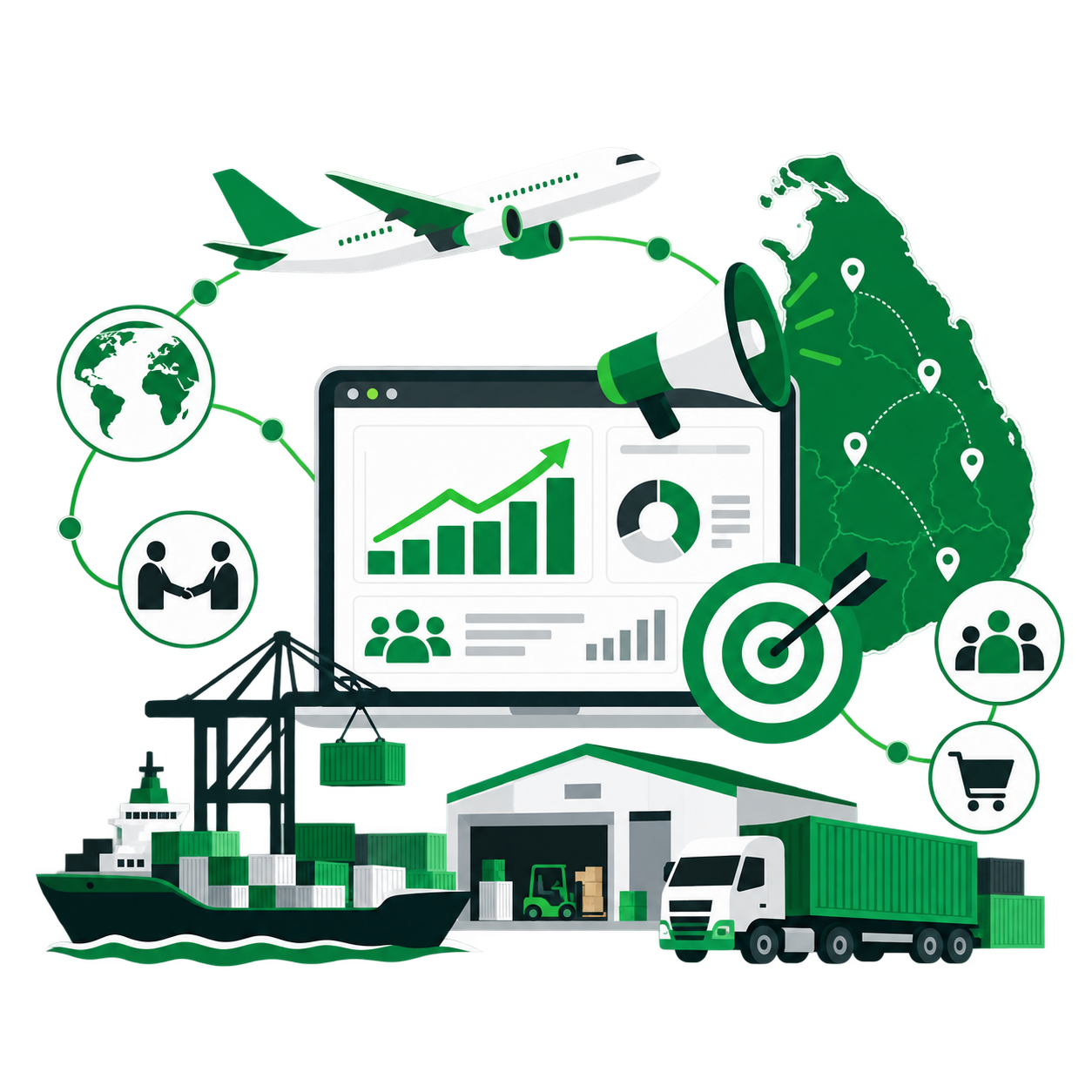
Transport and logistics communication in Sri Lanka may involve English, Sinhala, Tamil or a combination depending on the intended customer.
Translation should preserve the genuine operational meaning of the source information.
Domestic marketing may require stronger Sri Lankan geographic context and legitimate local or service-area information.
International targeting may require legitimate market-specific content, language choices and accurate international coverage.
Customers can increasingly discover businesses through traditional Google search, AI-generated answers, generative search experiences, social platforms and company websites.
Keep business names, service descriptions, contact details, genuine locations, service areas and company information consistent where appropriate.
AI can assist research, outlines, FAQs and content planning, but operational claims such as service areas, rates, certifications, tracking, customs capabilities and timelines must be verified by people.
Review services, customers, geographic market, objectives, current website, search presence, marketing channels and relevant budget context.
Understand how relevant customers may search, compare, evaluate and contact the business across digital channels.
Select appropriate website, SEO, Local SEO, PPC, social media, content, email and analytics capabilities according to the agreed scope.
Implement agreed website pages, landing pages, search activity, advertising, social communication or email activity.
Review relevant performance data, campaign issues, content gaps, landing-page observations and future channel priorities without promising guaranteed growth.
W3 Media provides connected capabilities across website development, SEO, paid advertising, social media, landing pages, email, creative work, analytics and evolving AI-search-focused optimization.
SEO, Local SEO, technical SEO and search strategy.
PPC campaigns aligned with defined business objectives.
Corporate websites, service pages and campaign destinations.
Entity clarity, semantic SEO and generative search considerations.
Clear answers for transport and logistics companies evaluating website, SEO, PPC, social media, content and digital marketing strategy.
Digital marketing for transport and logistics companies uses websites, SEO, paid advertising, social media, content and analytics to help businesses present their services, reach relevant customers and measure digital marketing activity. The strategy can vary depending on whether the company serves B2B buyers, consumers, domestic customers, international markets or a combination of these audiences.
Logistics digital marketing uses familiar digital channels, but the customer journey can involve more complex service requirements, geographic coverage, operational capabilities and business-to-business decision making. Marketing therefore needs to explain what services are provided, where they are available, who they are suitable for and how potential customers can request further information or a quotation.
Useful channels can include SEO, Google Ads, social media, industry-focused content, email marketing and well-structured websites or landing pages. The right channel mix depends on customer search behaviour, business goals, service type, geographic market and available budget rather than using every channel automatically.
SEO can help a logistics company improve how clearly its website is structured and discovered for relevant transport, freight, delivery, warehousing or other logistics-related searches. This can include keyword research, service-page optimization, technical SEO, internal linking and local or international search considerations where relevant. SEO does not guarantee a specific ranking position.
Local SEO focuses on improving visibility for location-based searches relevant to the business. For a transport or logistics company, this can involve Google Business Profile optimization, accurate business information, local keyword research, location-focused pages and other local search signals where the company genuinely serves customers in particular areas.
The choice depends on search demand, competition, budget and timeframe. SEO can support longer-term organic search visibility, while Google Ads can provide paid visibility for selected searches and campaigns. A logistics company may use both when appropriate, with paid search supporting immediate demand while SEO develops over time.
A logistics website should clearly explain the services offered, geographic coverage, customer types, relevant operational information and how potential customers can contact the business or request a quote. It can also include company information, service details, useful FAQs, supporting content and trust information where appropriate.
Separate service pages can be useful when each logistics service has distinct customer needs, search intent and enough meaningful information to justify its own page. Businesses should avoid creating thin or repetitive pages purely to target keywords. The website structure should reflect the real services offered and make navigation clearer for users.
Platform selection should reflect the audiences the logistics company wants to reach, the role of social media in the customer journey and the content the business can realistically produce. A B2B logistics provider may use platforms differently from a consumer delivery business, so there is no need to maintain every social channel simply for visibility.
No. Digital marketing can improve visibility, support demand generation and create opportunities for enquiries, but it cannot guarantee a specific number or quality of logistics leads. Results depend on factors such as market demand, competition, service fit, pricing, website experience, sales follow-up, campaign quality and available budget.
Relevant metrics depend on the business objective. A logistics company may review website traffic, search visibility, qualified enquiries, quotation requests, conversion rate, paid-media costs, cost per lead and other actions connected to real business outcomes. Reporting should focus on meaningful performance indicators rather than visibility numbers alone.
AI can support logistics digital marketing through research organization, content ideation, drafting, data analysis and workflow assistance. However, information about services, destinations, delivery capabilities, pricing, transit times and other operational claims should be checked against accurate business information before publication. AI should support, rather than replace, human review and marketing judgment.
Build a clearer digital presence around your genuine services, intended audiences, geographic market and business objectives using relevant website, search, advertising, social media, content and measurement capabilities.
Discuss Your Logistics Marketing →We use cookies to give you the best experience. Cookie Policy